 Austria
 Belgium
 Bulgaria
 Croatia
 Czech Republic
 Denmark
 Estonia
 Finland
 France
 Germany
 Greece
 Hungary
 Ireland
 Italy
Italy
 Latvia
 Lithuania
 Luxembourg
 Netherlands
 Poland
 Portugal
 Romania
 Slovakia
 Slovenia
 Spain
Spain
 Sweden
Medieval Feasts in Modern Dress
2026. 07. 13.
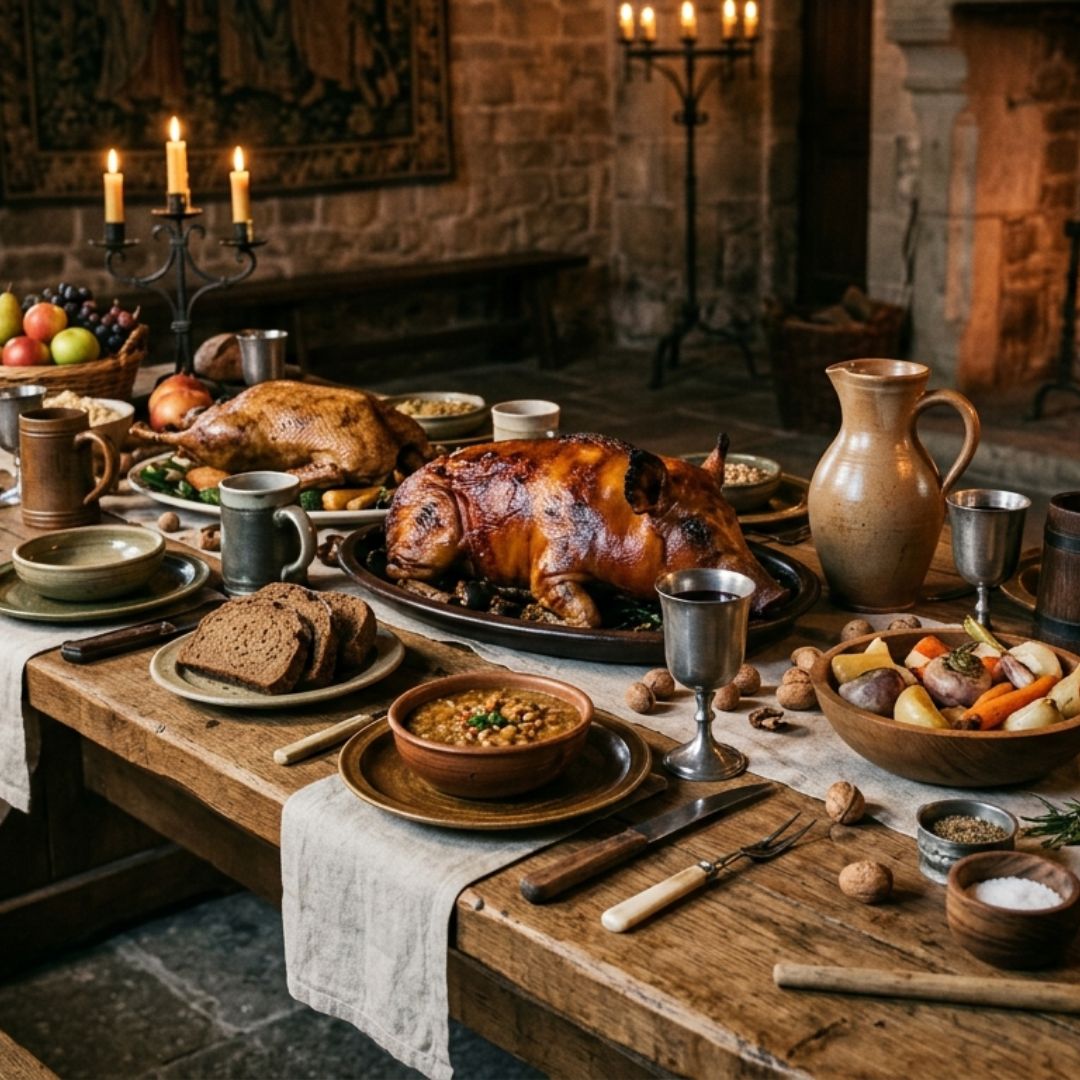
When people hear about medieval feasts, most picture enormous roasted wild boars, cups brimming with wine, groaning wooden tables, and boisterous revelry. While these images aren't entirely unfounded, the gastronomy of the era was far more complex and sophisticated than films and novels would have us believe.
A medieval noble feast was much more than a simple meal: it proclaimed the host's wealth and status. Over hours of festivities, courses followed one another alongside elaborate presentation and entertaining performances. Meat dishes were especially varied. Cooks boldly mixed sweet, sour, and spicy flavors: meats were seasoned with honey, fruit, vinegar, as well as pepper, cinnamon, ginger, and other exotic spices. Such rich seasoning was a symbol of refined taste and social rank.
Ordinary people's tables, by contrast, held far more modest fare. The foundation of their diet was bread, various porridges, legumes, cabbage, and onions, while meat only played a role on feast days. Yet many ingredients and preparation methods present in the medieval peasant kitchen remained important building blocks of European gastronomy today.
Honeyed, Spiced Meats – The Signature Flavor of the Middle Ages
If medieval cuisine had to be characterized by a single flavor combination, it would be the pairing of honey and exotic spices. Cooks of the era boldly mixed sweet and savory flavors, considered a hallmark of refined gastronomy. Since sugar was a rare and expensive luxury, dishes were mostly sweetened with honey. This was complemented with pepper, cinnamon, ginger, nutmeg, and other precious spices, which also signaled the host's wealth.
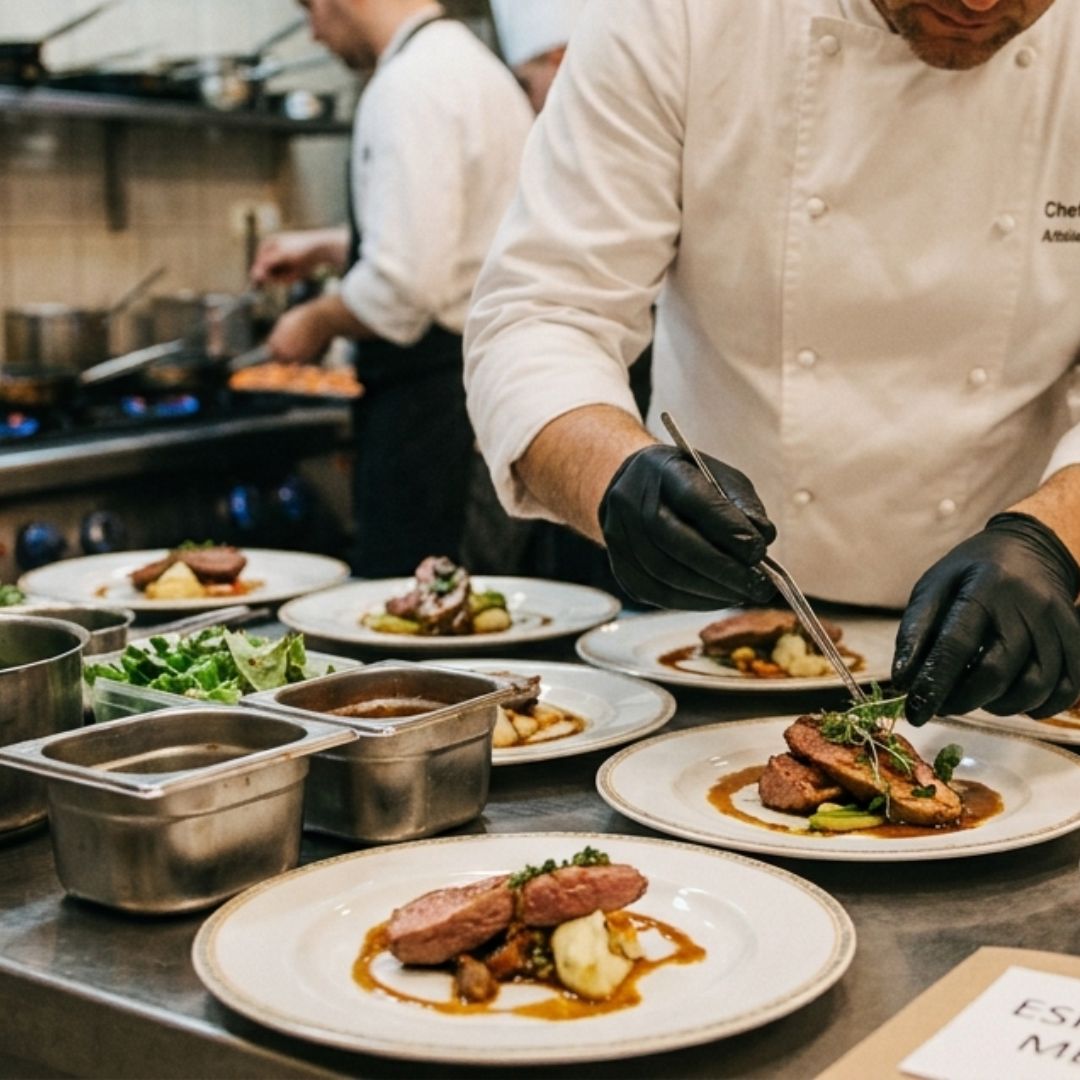
Meats seasoned with honey, spices, and fruit are far from unfamiliar today: a honey-mustard pork tenderloin or a ginger-orange duck breast are modern versions of this same centuries-old flavor tradition. The difference today lies mainly in more refined cooking techniques and a more balanced flavor profile.
Porridge in New Clothes
One of the most important staples of the medieval diet was porridge. Made from barley, oat, or millet grits, cooked with water, milk, or broth, it was consumed by nearly every layer of society. While noble tables enriched it with more lavish ingredients – butter, cheese, spices, or pieces of meat – for poorer families it often stood as a complete meal on its own.
Modern gastronomy has rediscovered these ancient grains, but approaches them with an entirely different mindset. Barley, for instance, can be turned into a creamy, risotto-like dish that, enriched with mushrooms, thyme, and aged cheese, would hold its own on a modern bistro menu. Millet and oats are also no longer confined to traditional cooking: they're increasingly popular as the base for creative side dishes, salads, and vegetarian main courses.
What once served mainly as a means of everyday survival is now a deliberate gastronomic choice.
When Fruit Joined the Meat
One of the most interesting features of medieval cuisine was that fruit appeared not only as dessert, but also as an accompaniment to meat dishes. The sweet-tart flavor of apples, pears, plums, or quince beautifully balanced fattier meats, which were often also seasoned with vinegar or wine.
This flavor pairing still feels familiar today: duck breast with plum sauce, pork roasted with apples, or game served with fruit sauce are all built on the same centuries-old flavor logic. What was once a natural part of medieval feasts remains a favorite solution in refined gastronomy today.
Spice Was Treasure
Today it's taken for granted that we can choose from countless spices in the kitchen, but in the Middle Ages these were true luxury goods. Pepper sometimes even served as a form of currency, while cinnamon, cloves, or nutmeg reached Europe only via long and costly trade routes.
That's precisely why the use of spices was about more than just flavor – it also expressed wealth and social rank. Medieval cooks boldly combined intense aromas, making festive dishes far bolder in flavor than many might assume today.
Flavors of the Past in Modern Dress
Looking back at the signature dishes of medieval cuisine, it's easy to see they're much closer to today's gastronomy than we might first think. The difference lies less in the ingredients or flavor pairings, and more in the method of preparation: today we work with more refined techniques, more precise heat control, and cleaner flavor profiles.
Slow roasting and braising, seasonal ingredients, bold flavor combinations, or pairing fruit with meat remain defining elements of modern cooking today. Reimagining old recipes is therefore not just a historical curiosity, but also a source of inspiration: proof that good ideas hold up even centuries later.
Medieval flavors, then, haven't disappeared – they've simply adapted to the taste of the times. And modern gastronomy gives them new life with new tools and techniques.
If you enjoy reading about the history of gastronomy, inspiring recipes, and kitchen tips, follow us on social media, and browse more interesting content on the GAMMO blog! In our webshop, you'll also find every kitchen tool you need to easily recreate these historically inspired dishes in a modern kitchen.