 Austria
 Belgium
 Bulgaria
 Croatia
 Czech Republic
 Denmark
 Estonia
 Finland
 France
 Germany
 Greece
 Hungary
 Ireland
 Italy
Italy
 Latvia
 Lithuania
 Luxembourg
 Netherlands
 Poland
 Portugal
 Romania
 Slovakia
 Slovenia
 Spain
Spain
 Sweden
Homemade vs. Restaurant Burgers: The Art of Crafting the Perfect Hamburger
2026. 02. 25.
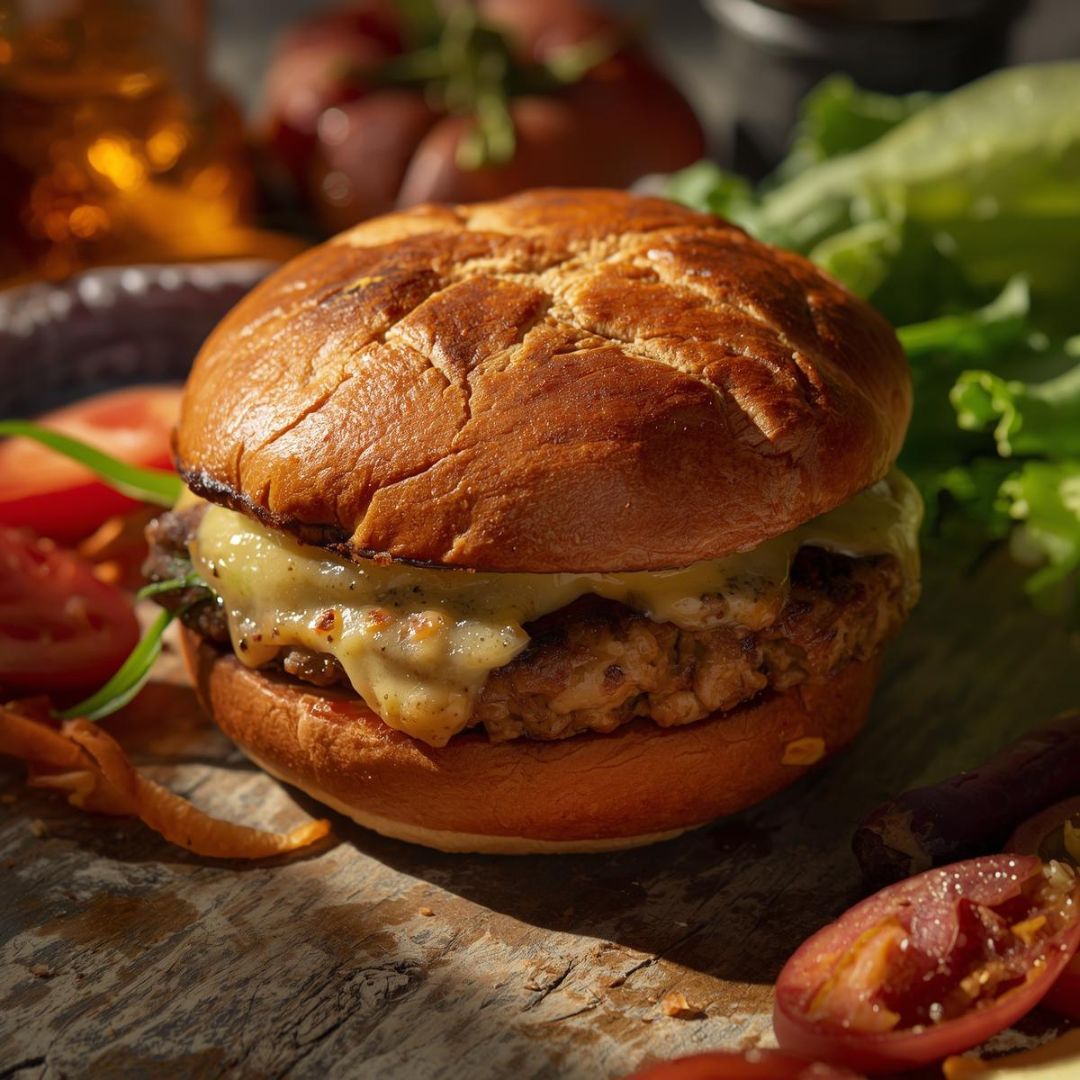
Today, the hamburger is far more than a quick street-side bite. Because of the street food revolution, it has evolved into a true gastronomic experience. The smash technique, buttery brioche buns, house-fermented pickles, and house-made sauces have elevated burger craftsmanship to an entirely new dimension. One only needs to look at the cult following of artisan burger joints, both locally and internationally, to see how far this category has come.
And then we go home, attempt to recreate the experience… yet somehow, it never quite measures up.
So what’s missing?
Spoiler: it’s not necessarily what you’d expect at first glance.
1. The Quality and Ratio of the Meat
The true soul of an exceptional burger lies in the patty itself. Most restaurants work with an 80/20 blend of ground beef—meaning a 20% fat content—and this is no coincidence. Fat is the primary carrier of flavor; it delivers richness and ensures the patty remains succulent and juicy throughout cooking.
At home, many make the mistake of opting for overly lean beef, assuming it to be the healthier choice. The result, more often than not, is a dry, crumbly patty lacking depth and moisture.
For this reason, professionals—and discerning home cooks—often choose to grind their own beef. Not only does this guarantee full control over the cut selection and quality, but freshly ground meat also retains a looser, more delicate structure, resulting in a markedly superior texture in the finished burger.
A small yet essential detail: it is advisable to chill the meat again before shaping the patties. Working with well-chilled beef makes handling easier, helps maintain structural integrity, and ensures the patty holds its shape more consistently during cooking.
2. Uniform Patties = Even Cooking
Familiar situation? One burger patty is thick, the other thin. One gets overcooked while the other stays raw in the middle. Restaurants don’t leave this to chance. With a burger press or mold, every patty ends up the same thickness, so they cook through in the same amount of time. This consistency is one of the biggest differences between home cooking and professional execution.
Smash or classic?
The smash technique didn’t become a trend by accident. The thinly pressed patty makes contact with a large surface of the hot griddle, creating an intense caramelized crust – that deep, charred flavor we all love. But here’s the key point: it requires high and steady heat.
A regular frying pan often can’t maintain the consistent heat that a professional grill or griddle can. An electric griddle heats up quickly, distributes heat evenly, and doesn’t lose performance even when cooking multiple batches. This is especially important in restaurants, but even with a high-end home setup, the difference is noticeable. The right temperature not only creates a better crust but also locks in the juices.
3. Bun
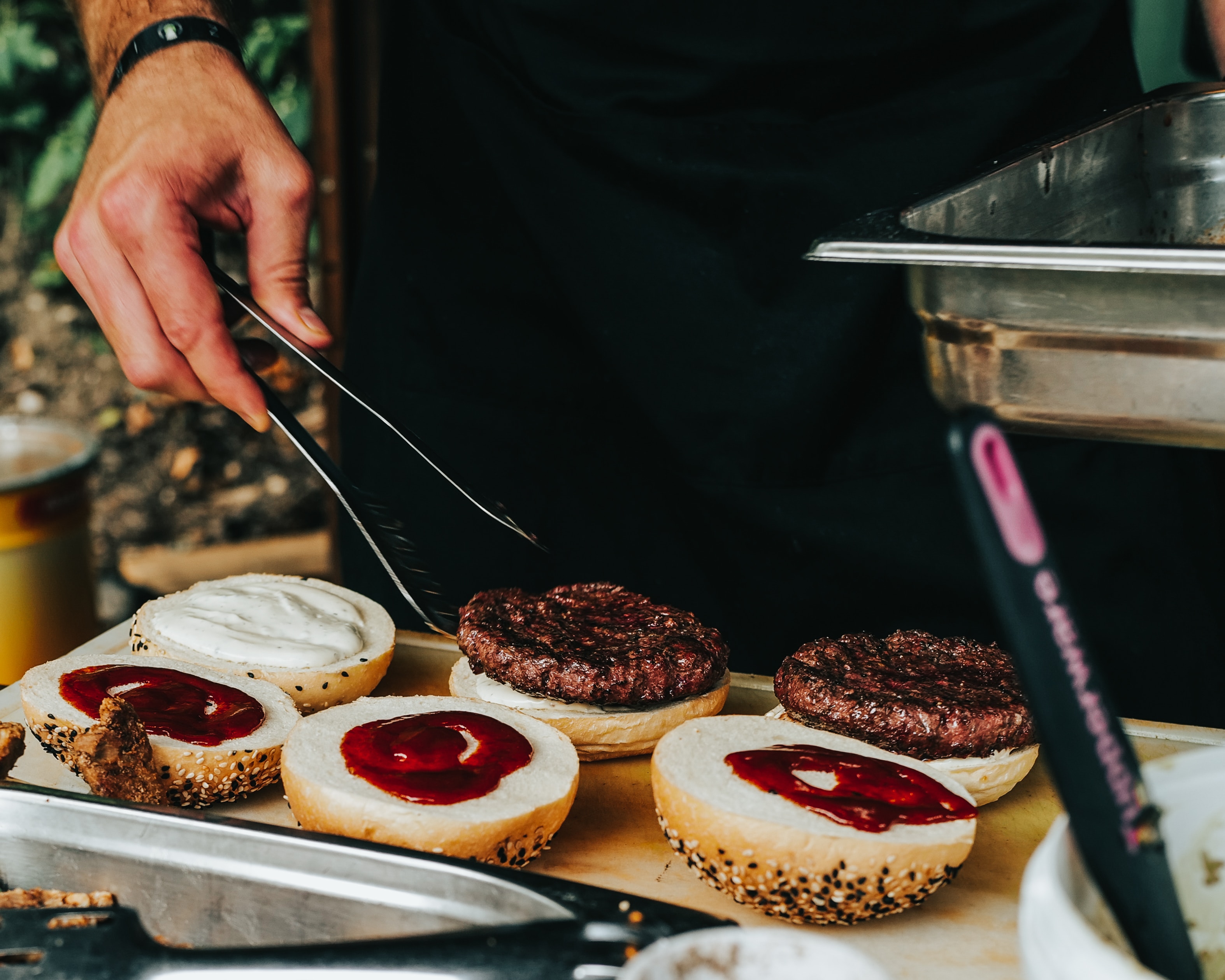
In a professional restaurant, the bun is just as important as the meat. The most popular choice is a brioche-style bun, made with eggs and butter, rich enough to hold up against the juices from the patty.
Restaurants often lightly toast the buns to make them more resistant to juices and sauces. A reliable contact grill comes in handy not just for the meat, but for toasting the buns as well.
4. Less is more – sauces and toppings
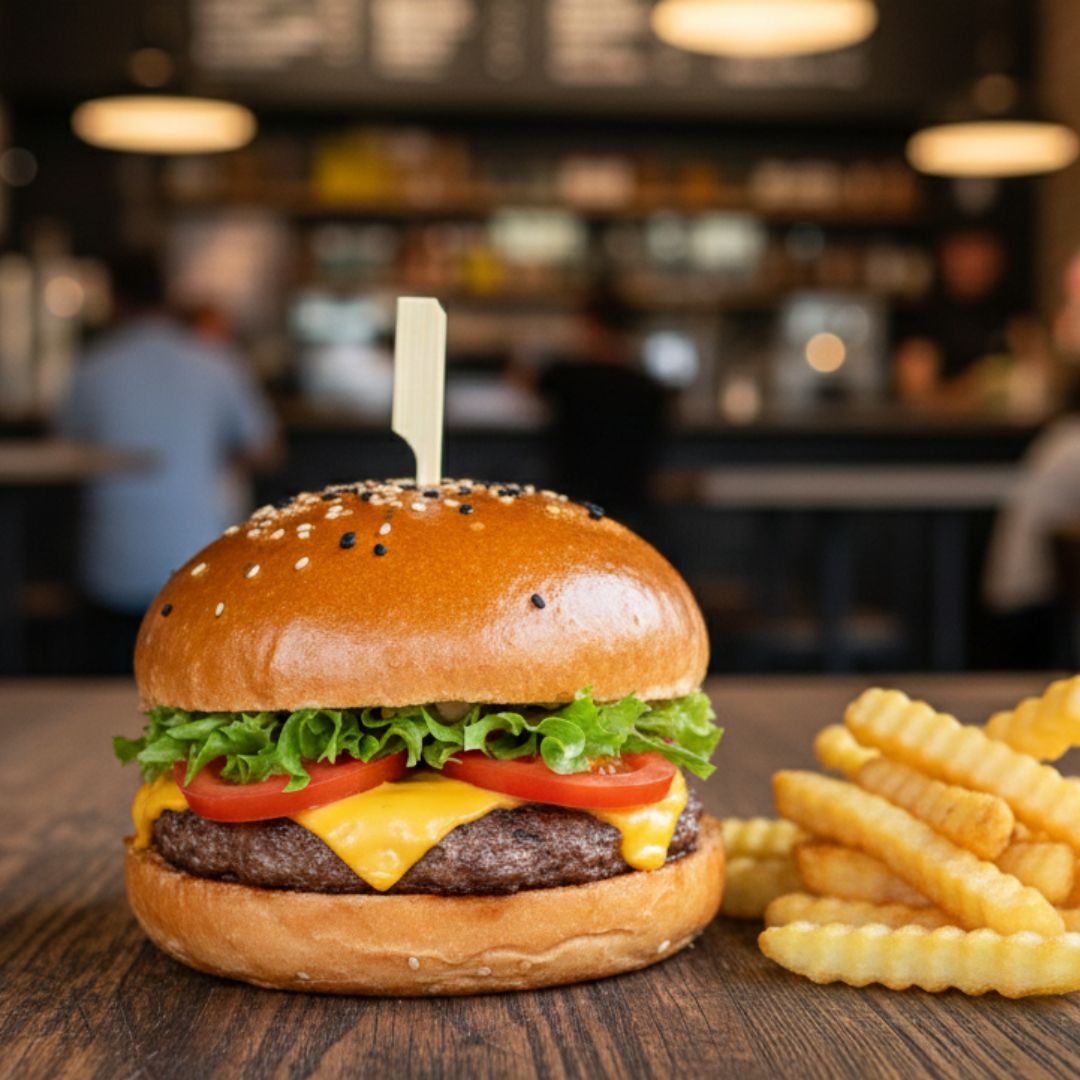
Restaurant burgers rarely become memorable because of quantity. It’s the thoughtful combinations that matter. A good cheddar, a crunchy pickle, fresh lettuce, and a flavorful sauce are more than enough. At home, though, we often go all in: double cheese, bacon, egg, caramelized onions, three kinds of sauce… Impressive? Yes. Easy to eat? Rarely. An overloaded burger falls apart, slips, and loses balance. One of the secrets of professional burger-making is knowing the right proportions.
In restaurants, it’s not just the ingredients but also the equipment that ensures perfection. High-performance exhaust systems, griddles with precisely controlled temperatures, and professional slicers all contribute to every burger reaching the table at the same high quality. If you want to take your home kitchen to the next level, it’s worth checking out our professional kitchen tools, because with the right equipment, the gap between home and restaurant-quality can disappear in an instant.